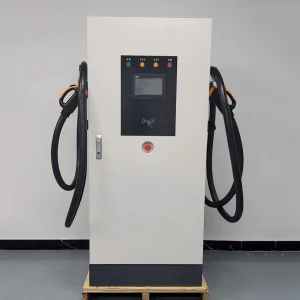
⚡Product Description
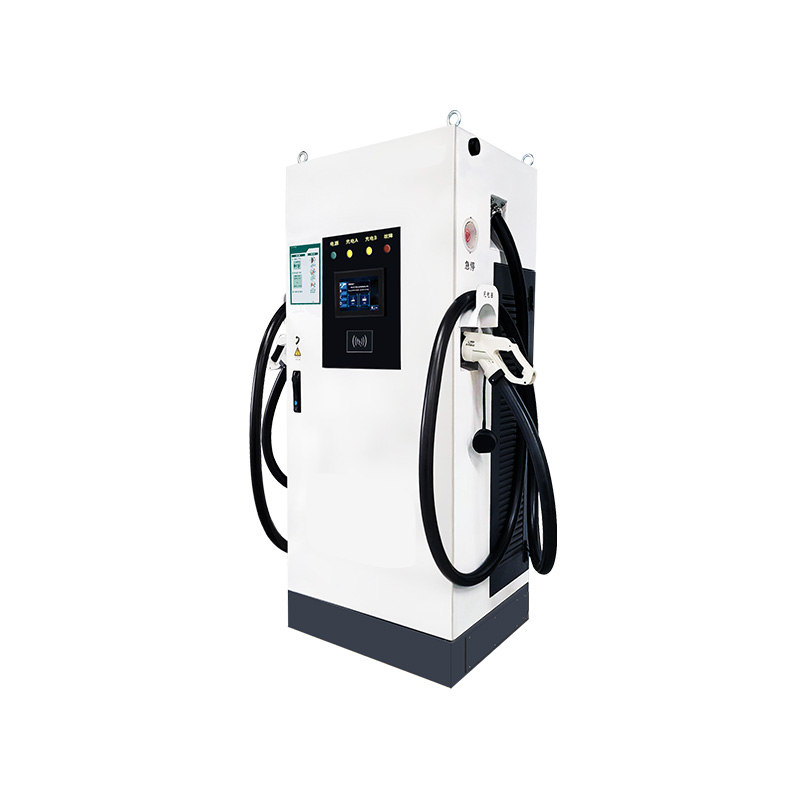
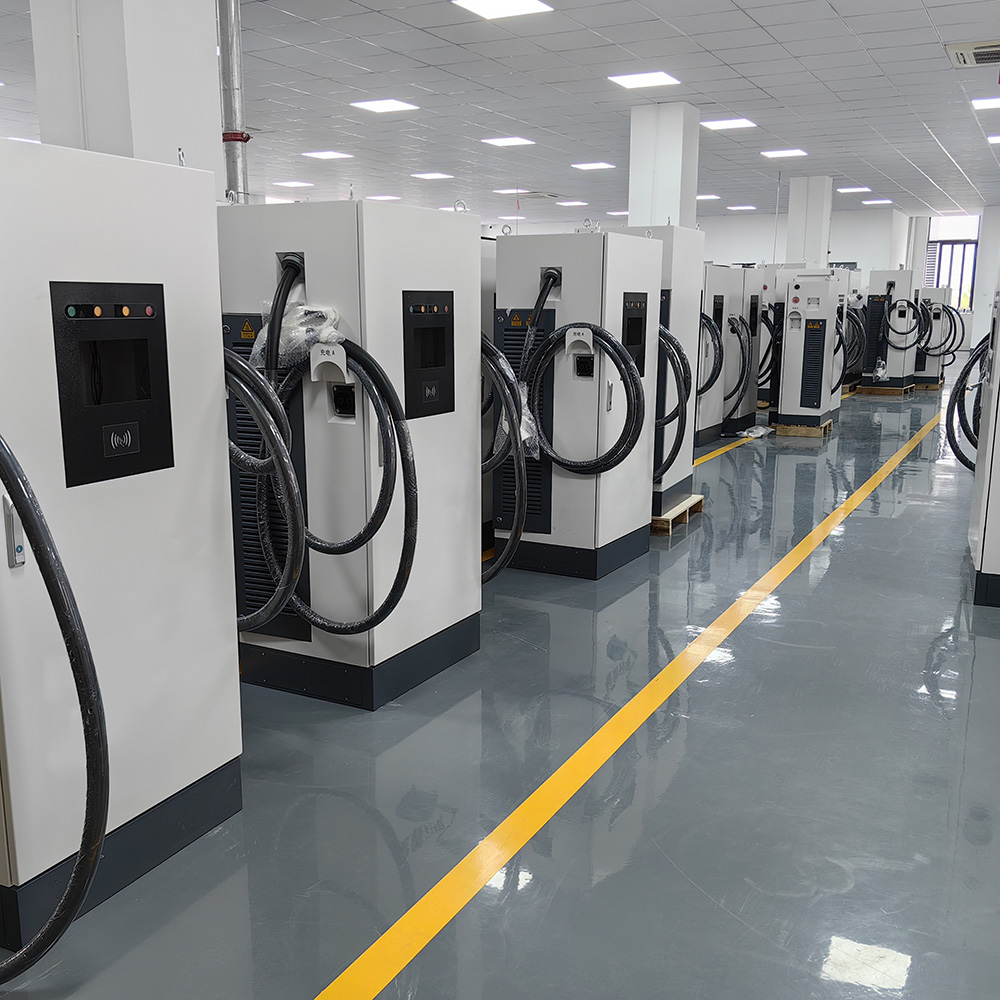
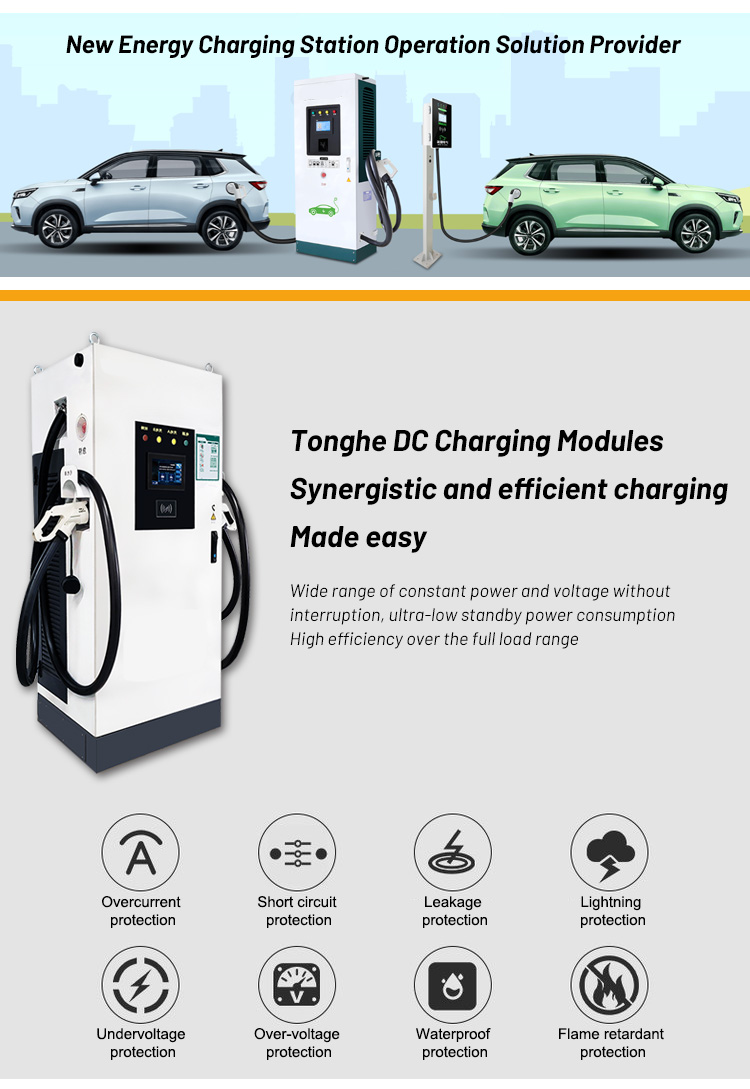
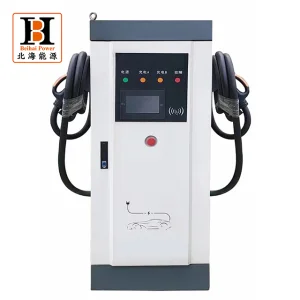
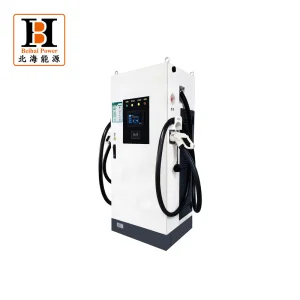
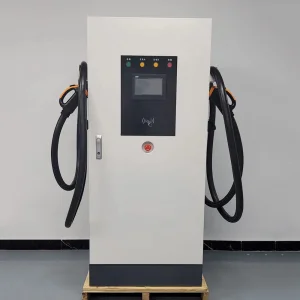
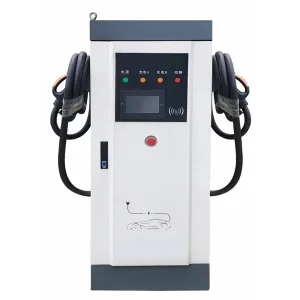
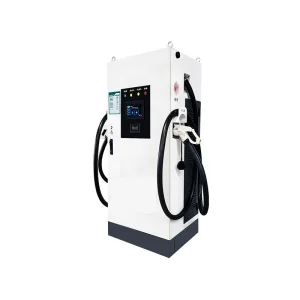
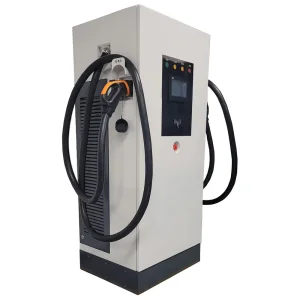
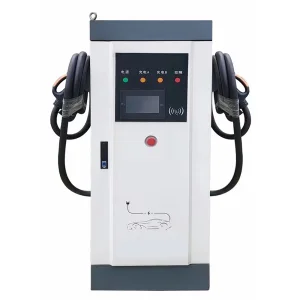
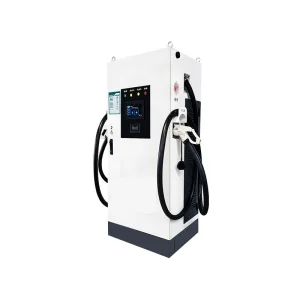
DC charging pile is a kind of charging equipment specially designed to provide DC power supply for electric vehicles. DC charging pile can convert AC power into DC power and directly charge the power battery of electric vehicles, which has higher charging power and larger voltage and current adjustment range, so it can realise rapid charging and provide electric vehicles with fast replenishment of electric power. In the process of charging, the DC charging pile can more efficiently utilise the electric energy and reduce the energy loss. The DC charging pile is applicable to various models and brands of electric vehicles with wider compatibility.
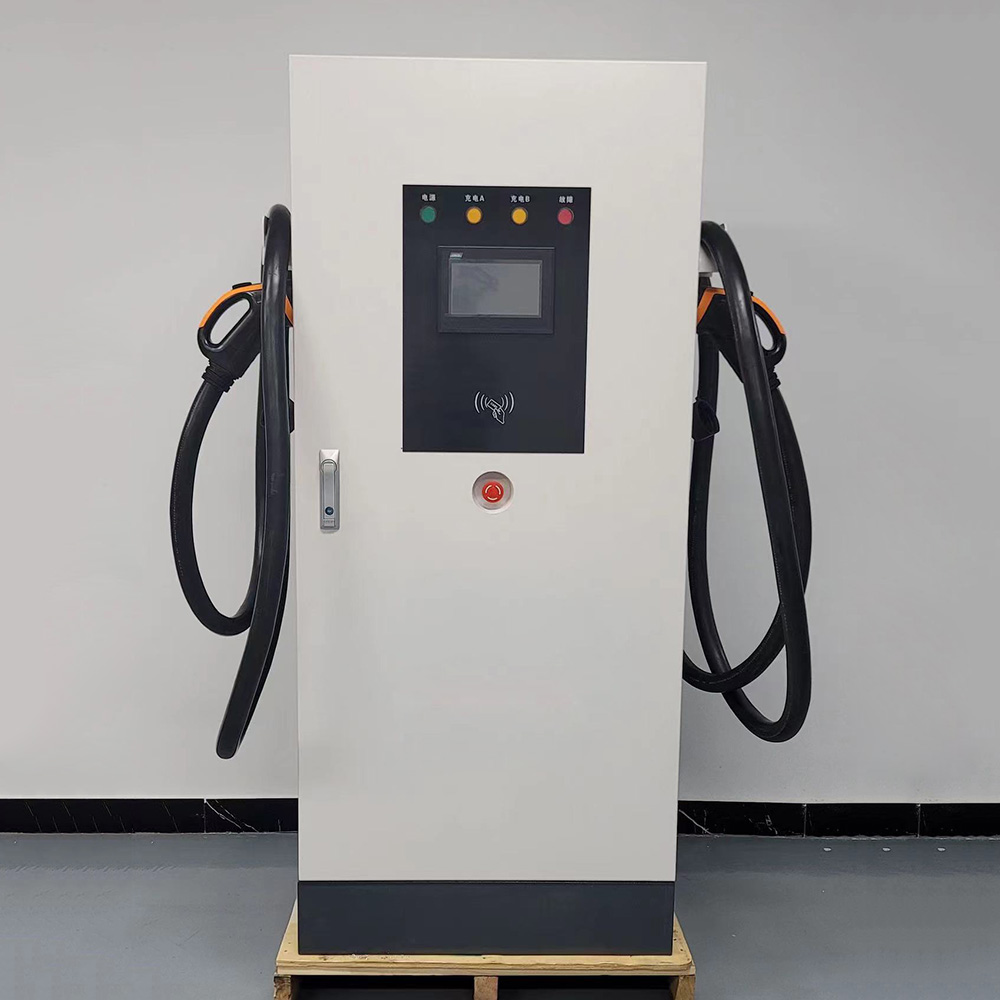
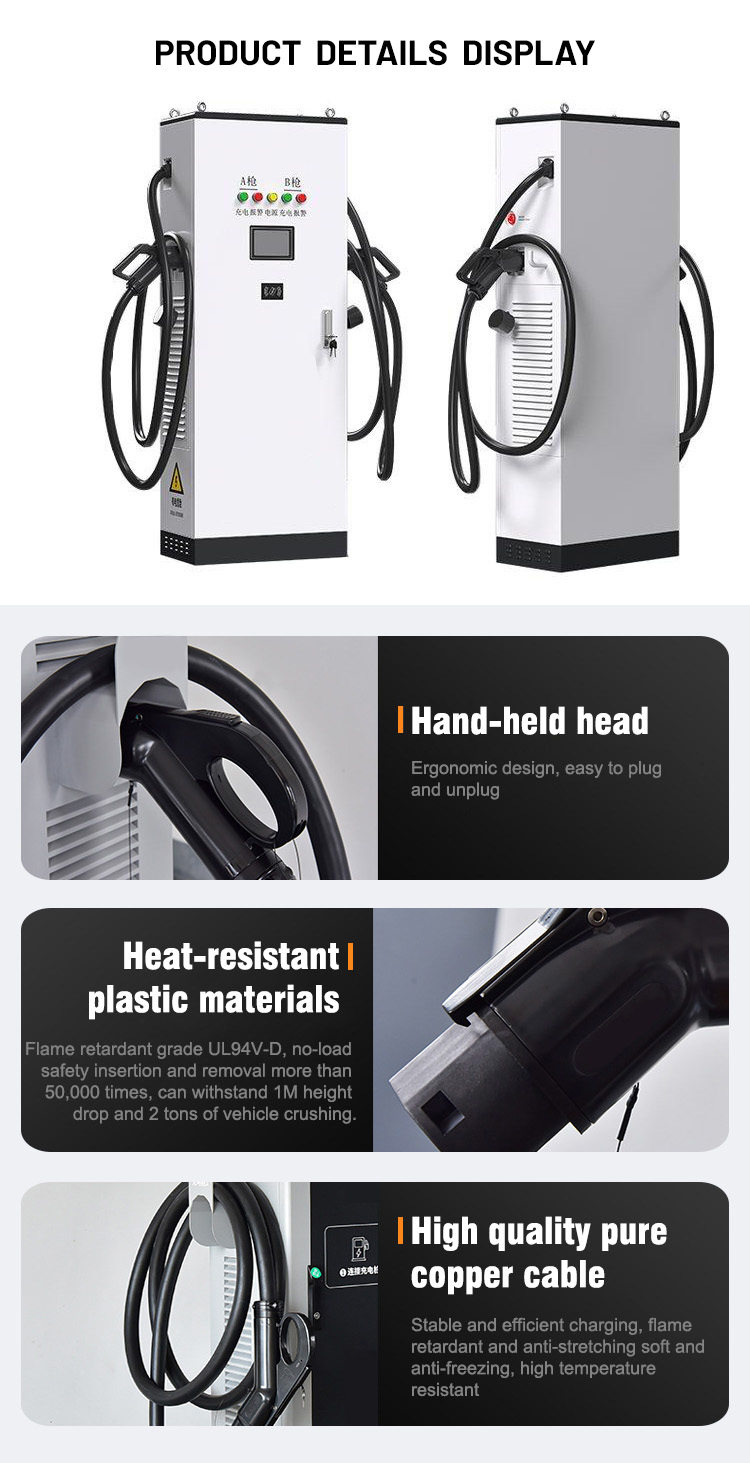
DC charging piles can be classified in different dimensions, such as power size, number of charging guns, structural form, and installation method. Among them, the more mainstream classification includes integrated DC charging piles and split DC charging piles; single gun and double gun piles; and floor-standing or wall-mounted types.
In summary, DC charging pile plays an important role in the field of electric vehicle charging with its efficient, fast and safe charging capability. With the continuous development of electric vehicle industry and the continuous improvement of charging infrastructure, the application prospect of DC charging pile will be more broad.
📊Product Parameters
| Technical parameters |
| AC input |
Voltage range (V) |
380±15% |
| Frequency (Hz) |
45~66 |
| Power factor |
≥0.99 |
| THDI |
≤5% |
| DC output |
| Output Specs |
Efficiency |
≥96% |
| Voltage (V) |
200~750 |
| Power (KW) |
40 |
60 |
80 |
120 |
160 |
180 |
240 |
| Current (A) |
80 |
120 |
160 |
240 |
320 |
360 |
480 |
| Interface |
No. of Guns |
1 / 2 |
2 |
| Equipment Other Information |
| Performance |
Voice (dB) |
<65 |
| Display |
7 inch color touch screen |
| Communication |
Ethernet (Standard Communication Protocol) |
| Environment |
Protection |
Air cooling, Intelligent distribution |
| Size (W*D*H)mm |
700*565*1630 |
💡Product Feature
AC Input:
DC chargers input AC power from the grid into a transformer, which adjusts the voltage to suit the needs of the internal circuitry.
DC Output:
The AC power is rectified and converted to DC power via charging modules connected in parallel and equalised via the CAN bus.
Control Unit:
The technical core responsible for switching, output voltage, and current control to ensure safety and efficiency.
Metering & Interface:
Includes a metering unit for billing, a standard-compliant charging interface, and a human-machine touch screen interface.
🏢Application
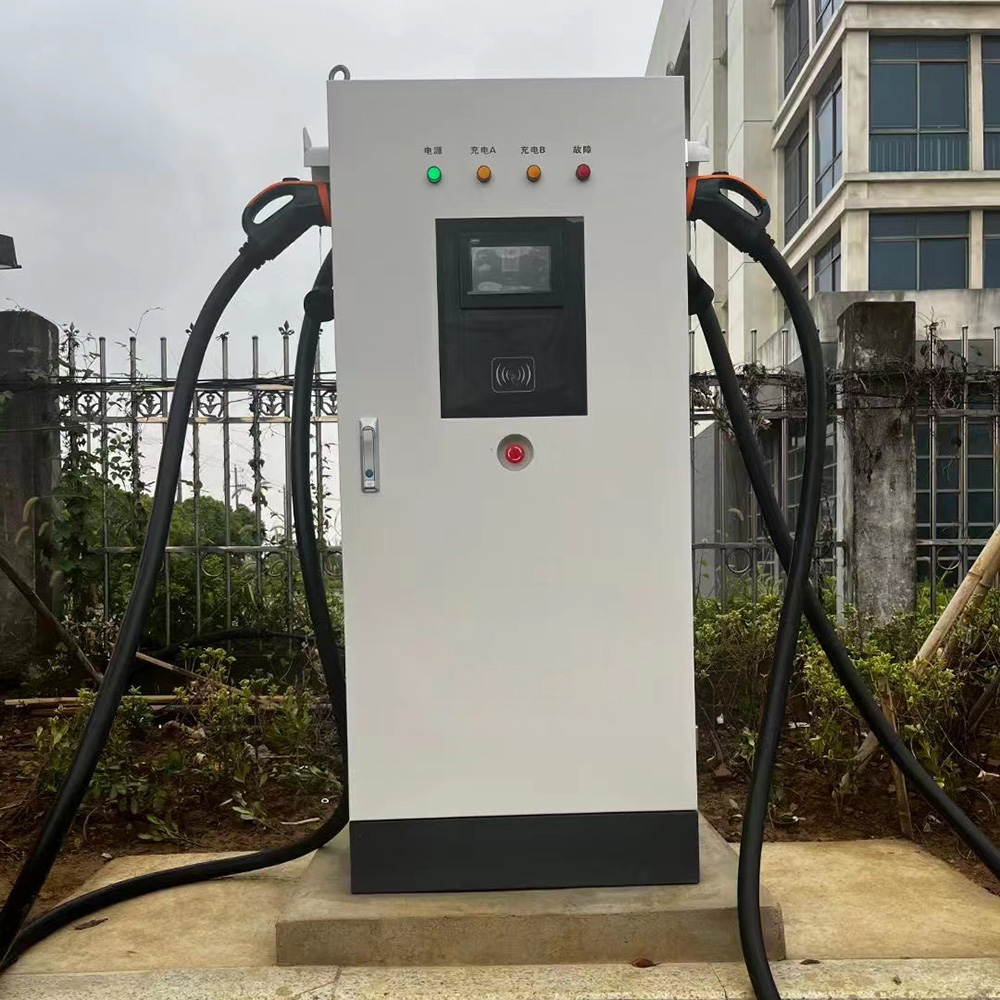
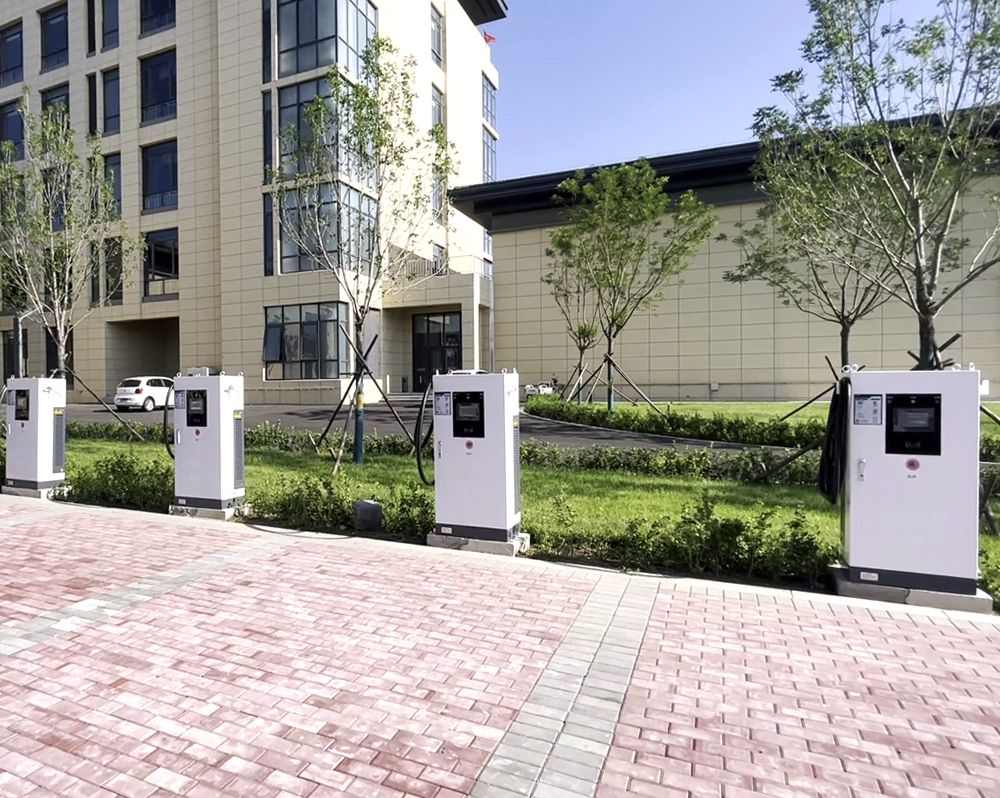
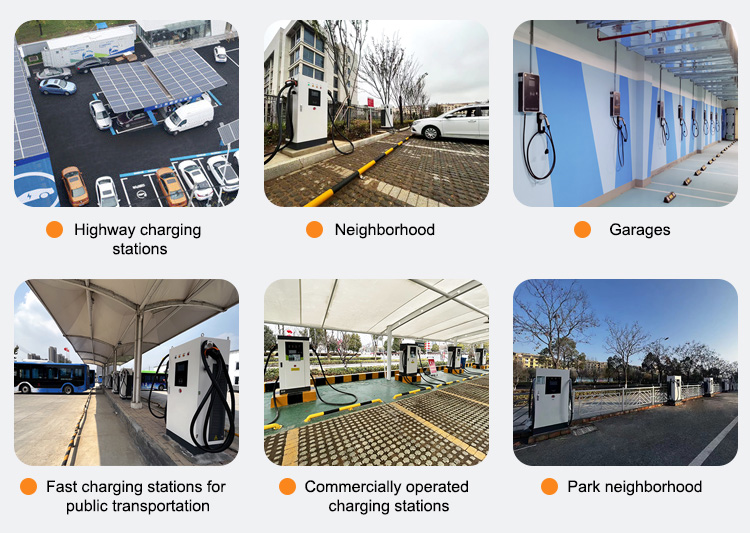
DC charging piles are widely used in several key scenarios:
- Public charging piles: Urban car parks, petrol stations, and commercial centres.
- Highway charging stations: Fast charging for long-distance EV travel.
- Logistics parks: Dedicated charging for fleet operation and management.
- Electric vehicle leasing: Efficient turnaround for rental vehicle fleets.
- Internal corporate use: Charging services for employees and customers at office buildings.
📖Profile & Display
❓Frequently Asked Questions
1. What is the difference between AC and DC charging?
AC charging is typically slower and relies on the vehicle's onboard charger, while DC charging converts power outside the vehicle and provides it directly to the battery, allowing for much faster charging speeds.
2. How long does it take to charge an EV with a DC charger?
Charging time depends on the power output (e.g., 60KW vs 240KW) and the vehicle's battery capacity, but DC chargers can typically charge an EV to 80% in 30 to 60 minutes.
3. Are these DC charging piles compatible with all electric vehicles?
Yes, our DC charging piles are designed with standard-compliant interfaces that offer wide compatibility across various models and brands of electric vehicles.
4. Can I install a DC charging pile on a wall?
While the standard models shown are floor-standing types, DC charging piles can be classified as either floor-standing or wall-mounted depending on the specific structural design and installation requirements.
5. What safety protections do these units include?
The units feature intelligent distribution, air cooling dissipation control, and a central control unit that monitors voltage and current to ensure a safe charging process.
6. How is the charging process managed for billing?
Each unit includes a DC watt-hour meter for accurate metering and billing, and the operation can be managed via swipe cards or mobile scanning through the touch screen interface.