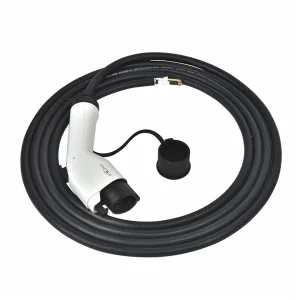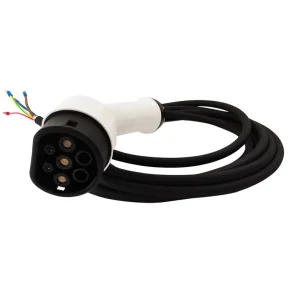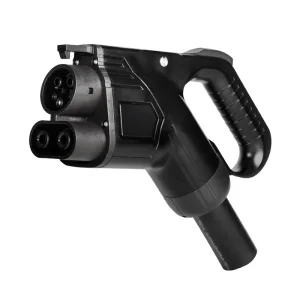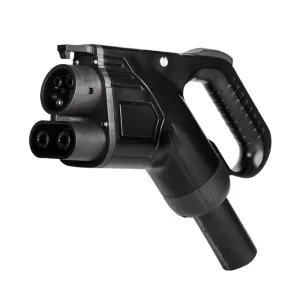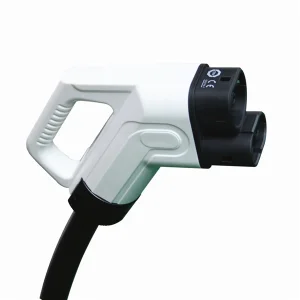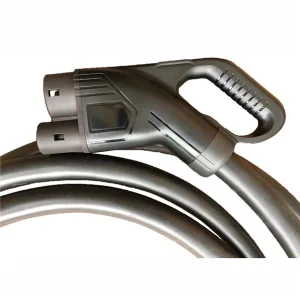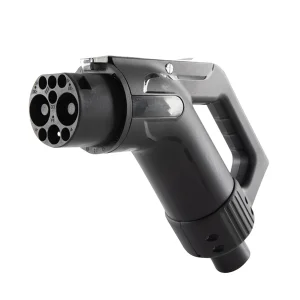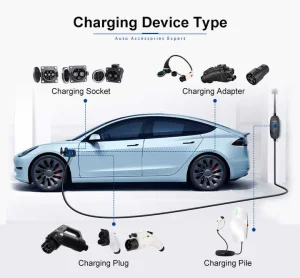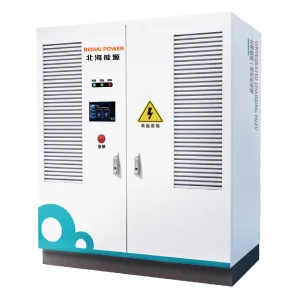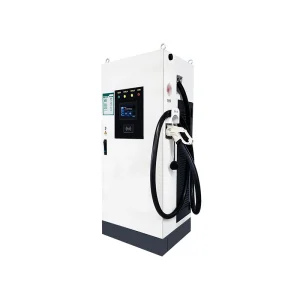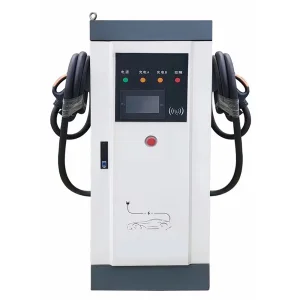
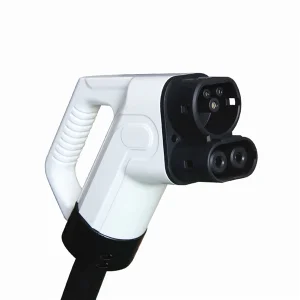
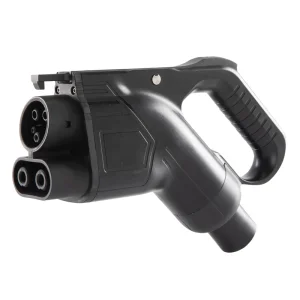
Engineered for seamless compatibility across diverse global EV standards. Built using premium flame-retardant thermoplastics, silver-plated copper alloy terminals, and advanced thermal sensor technologies.

Libya is strategically positioned to redefine its national energy profile by pivoting towards zero-emission transition pathways. Historically reliant on hydrocarbon extraction, the country's domestic grid and transit systems are experiencing a progressive modernization push. Initiated by both public sector utility projects—under the supervision of the General Electricity Company of Libya (GECOL)—and private commercial shipping, municipal logistics, and oil & gas operators, Libya is laying the groundwork for a robust electric vehicle (EV) infrastructure network.
Deploying reliable EV charging infrastructure in Libya requires a sophisticated understanding of regional parameters. Operating charging equipment in this territory demands hardware resilient to intense environmental stresses: sand dust particulate contamination, extreme operational temperature fluctuations peaking up to 55°C ambient, and structural grid imbalances that create local load variations. High-performance, certified, and thermoregulated EV connectors are the fundamental components required to bridge the energy transmission gap between the volatile grid and incoming fleets of electric utility vans, public buses, and commercial logistics transport vehicles.
The global EV supply equipment (EVSE) sector has transitioned into a highly regulated ecosystem, with manufacturers converging on unified connector interface architectures. The current landscape is categorized under three major regional paradigms: the North American standards (SAE J1772 & NACS/SAE J3400), the European protocols (IEC 62196 Type 2 & CCS2), and the East Asian standardizations (GB/T 20234 and CHAdeMO). At Beihai Power, we address this fragmented market by engineering multi-standard hardware solutions designed to operate harmoniously within heterogeneous fleets.
Our global engineering footprint dictates that connectors must do more than just deliver raw current. The integration of CAN bus signaling, high-integrity PLC communication protocols, and continuous PT1000 thermal monitoring sensors within the charging gun body represents the modern threshold of technological reliability. As global freight forwarders and transit fleets upgrade to megawatt-level charging (MCS), liquid-cooled DC connector systems are rapidly becoming the gold standard for high-duty cycles.
In Libya, the strategic integration of EV charger systems centers around key nodes: metropolitan hubs like Tripoli, Misrata, and Benghazi, and remote industrial centers including oilfields and shipping terminals. The application profiles can be summarized as:
Beihai Power implements a vertically integrated manufacturing line governed by strict international standards. Every step is tailored to ensure robust component integrity.
Precision selection of high-grade copper alloys and premium fireproof TPU/PC polymers utilizing CNC laser cutting machines.
Heavy-duty enclosure formation utilizing structural hydraulic press systems and protective corrosion-resistant coatings.
Structural integration of charging modules, heat sinks, control boards, and heavy terminal wiring matrices.
Rigorous dielectric testing, insulation resistance checking, and initial simulated load profile evaluations.
Automated PCB mounting, sensor integration, and thermal management configuration under ESD-protected environments.
Coupling electrical modules with high-conductivity cables and ergonomic, shock-resistant charging guns.
Full-scale Functional Verification Testing (FVT) simulating variable power draws, system faults, and high thermal spikes.
CE, TUV, and RoHS certified designs ensuring long-term operational safety in high-stress industrial environments.
To sustain charging speeds exceeding 350 kW in harsh ambient climates, the industry has transitioned towards active thermal management systems. Standard conductive charging guns operating at currents exceeding 250A generate significant heat at the contact point. Without mitigation, this triggers automatic thermal de-rating, reducing charge speeds to prevent terminal damage.
Beihai Power's advanced research concentrates on active liquid-cooled configurations (ethylene glycol-water mixtures) that reduce the required copper cross-section while safely carrying currents up to 500A. In parallel, our structural engineers have developed customized synthetic outer TPU jacketing that remains highly flexible at low night-time temperatures yet shows zero deformation under direct ultraviolet exposure typical of Libyan desert environments.
The incorporation of silver-plated copper alloy terminals with dual temperature sensors (located on both positive and negative DC pins) guarantees that the control microprocessor can monitor real-time thermal curves. If the contact point approaches 90°C, the system communication loop safely regulates the supply current, protecting the vehicle's onboard battery management system (BMS) and the charger module assembly.
Explore our complete catalog of industrial-grade AC / DC EV chargers and high-amperage connector guns engineered for robust continuous deployment.
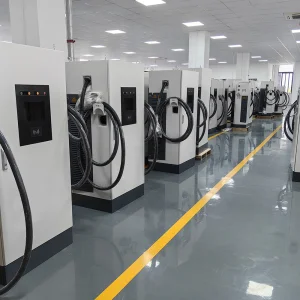
Beihai Power is a specialized manufacturer dedicated to the innovation of DC fast-charging technology and smart AC charging technology. We bridge the gap between complex energy requirements and reliable infrastructure delivery for governments, commercial fleets, and industrial clients across Central Asia, Southeast Asia, the Middle East, Europe, Africa, South America, and North America.
Our core mission is to solve the critical challenges of charging speed, system reliability, and grid integration. By focusing on the performance of our integrated charging modules and high-conductivity copper connector interfaces, we provide high-efficiency power solutions that ensure faster, safer, and more stable energy transfer for large-scale vehicle infrastructure projects globally.
Our engineering portfolio is designed to withstand structural stress. From high-capacity 480KW units to compact commercial charging stations (20kW, 30kW, 40kW), our hardware is engineered for long-term utilization in public charging networks. We specialize in engineering adaptations, such as our 150kW Mobile DC Fast-Charging Solution integrated into commercial vans, developed specifically to meet the unique grid and environmental requirements of our clients in Colombia and the USA.
Equipped with state-of-the-art testing equipment, Beihai Power maintains strict ISO9001 and ISO14001 factory compliance. Every batch of chargers and individual connector assemblies undergoes thorough environmental chamber testing, mimicking extreme humidity, direct UV rays, salt spray corrosion, and structural mechanical load to ensure compliance with global markets.
Find authoritative answers regarding the selection, deployment, and testing of high-voltage electric vehicle connectors in North Africa and industrial application zones.
Partner with China's premium charging systems factory. We support bulk sourcing, customized OEM/ODM builds, and site planning compatibility for the Libyan market.
Send Inquiry Now